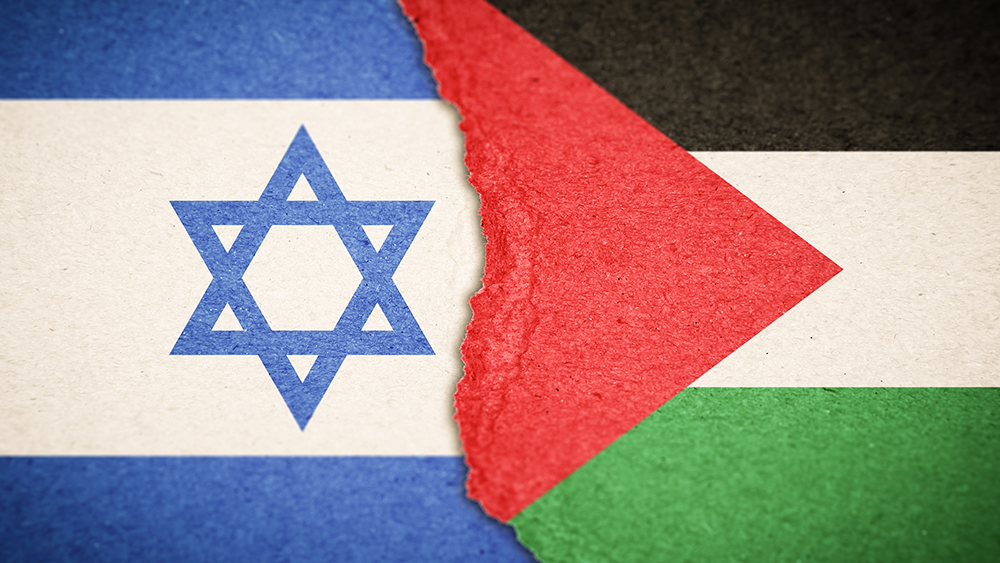
The dangerous doctrine of ethnic supremacy: How Zionist rhetoric fuels global division and threatens universal human rights
12/02/2025 / By Lance D Johnson
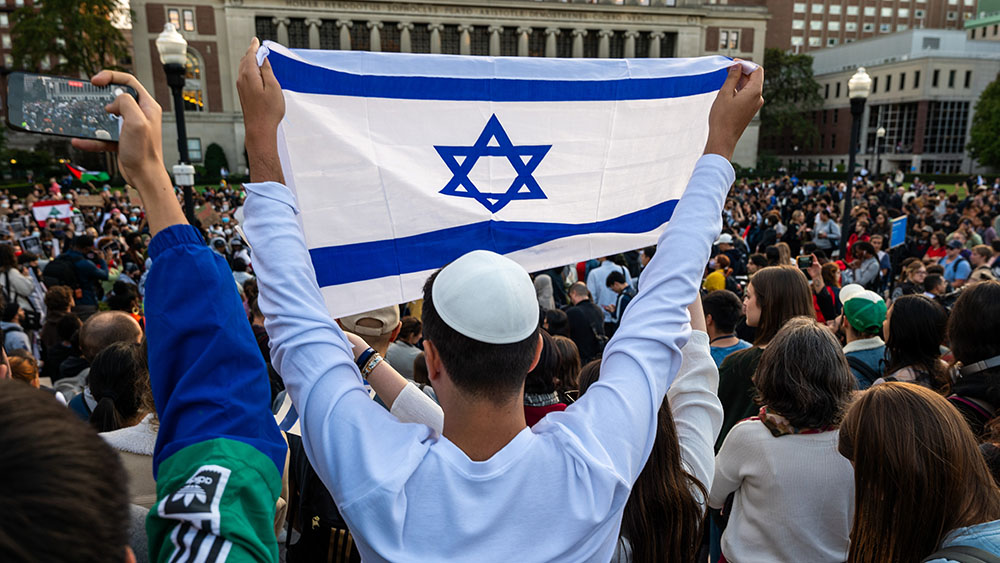
In an era where cultural identity is celebrated as a cornerstone of human diversity, a troubling narrative is being promoted that threatens to unravel the very fabric of mutual respect between nations. The recent statements by commentator Melanie Phillips at a pro-Israel conference do not merely advocate for Jewish pride; they cross into a territory that demands scrutiny by all who believe in equality.
When any group, regardless of its history or heritage, begins to assert a doctrine of inherent superiority and exclusive entitlement, it sets a perilous precedent that history has shown can lead to conflict and suffering. The principles of sovereignty and self-determination are vital, but they must be balanced with the universal recognition that no single people’s rights should eclipse those of another. Moreover, a “Jewish State” should not rule soverign nations, nor should their self interests supersede democratic representation or impede individual liberties.
Key points:
- Melanie Phillips, speaking at a Shurat Hadin conference, called on diaspora Jews to prioritize Jewish people and the Jewish nation above their countries of citizenship.
- Phillips asserted that Jewish values are the foundation of Western civilization and dismissed Palestinian identity and claims to land.
- The rhetoric aligns with a growing public discourse among some Zionist thinkers that positions Jewish interests as paramount, fostering a perceived superiority complex.
- This ideology, when taken to an extreme, can be used to justify policies of displacement and violence against other groups.
- The pushback against such ideologies stems from a global commitment to the equality of all peoples and cultures.
Cultural identity is important but racial supremacy is another thing
The concept of cultural identity is a profound and personal anchor for individuals worldwide. For Jewish people, a history marked by persecution has made the preservation of their culture, traditions, and community a powerful and understandable imperative. Writers like Melanie Phillips passionately defend this identity.
However, the conversation shifts fundamentally when advocacy for one’s own group transforms into a doctrine of supremacy and exclusion. Phillips’s explicit instruction that Jewish identity must come “first and foremost,” labeling everything else as “secondary,” moves beyond cultural preservation. It enters the realm of ethno-nationalist primacy, which, when institutionalized, conflicts with the foundational ideals of multicultural democracies built on equal citizenship.
This philosophy was laid bare in Phillips’s October 2025 conference speech. She told attendees, “You are part of the Jewish people and the Jewish nation, and that should come first.” In a revealing moment, she corrected herself: “Sorry I said you should be loyal to your host country!”
This slip is not trivial; it highlights a core tension between a singular ethnic loyalty and the integrated civic loyalty required in a pluralistic society. Further, her declaration that “there is no such thing as Palestine” and “there is no such thing as the Palestinian people” is a rhetorical erasure that denies the historical presence, national aspirations, and very humanity of millions currently facing annihilation. Such statements provide ideological cover for policies that critics argue have led to displacement, hardship, and violence against a certain group of people.
Jewish Supremacy and territorial claims, a hostile combination
The issue reaches a critical point when this worldview is paired with territorial claims. Phillips stated, “The Jews are the only people who have any entitlement to any of this land … And they are the only people who have an entitlement to all of it.” This absolute assertion leaves no room for the rights or heritage of other communities living on that land. History is replete with the tragic consequences when one group claims a divine or historical right to territory at the expense of another. It is this pattern that raises alarm among observers who see in such rhetoric a justification for ongoing conflict and humanitarian crisis. The health of any nation, and indeed global peace, depends on recognizing the interconnectedness and equal value of all peoples.
This perspective is not operating in a vacuum. It echoes in broader discussions within certain intellectual circles. At the recent Tikvah Fund Jewish Leadership Conference, figures like Ben Shapiro and Bari Weiss discussed leveraging Jewish “capital” and networks to advance community interests. While ethnic networking is common to many cultures, the explicit discussion of wielding influence, coupled with Shapiro’s dismissal of criticism over billions in U.S. aid to Israel as a “convenient talking point” for the ignorant, can foster a perception of a powerful lobby operating above the concerns of ordinary citizens. This fuels resentment and the very divisions these conferences claim to lament.
The essential push-back against this form of extreme Zionism is not an attack on Jewish identity or safety. It is a defense of a simple, universal principle: one culture or people is not superior to another. The beauty of the global community lies in its tapestry of traditions, faiths, and histories. Each deserves respect and protection.
But when the ideology of “our people first” morphs into “our people only,” it becomes a force for division and potential violence. The rights of Jewish people to security, self-expression, and cultural continuity are undeniable and must be defended. Those rights, however, cannot be secured by denying the same rights to Palestinians or by positioning Jewish interests as superior to those of all other groups within diverse nations.
The sustainable path forward rejects ethnic supremacy in all its forms. It requires republics and their citizens to hold fast to an equal regard for the rights of all people, regardless of ethnicity or belief system. It demands that love for one’s own heritage be coupled with respect for the heritage of others. The warnings are clear: when any group, empowered by a doctrine of superiority, seeks to reshape the world order solely around its own interests, it invites inevitable and justified resistance from the rest of the human family, who will rightly demand the same dignity and space to thrive.
To protect “Western civilization” and maintain integrity, the “Jewish State” must cherish their cultural identity, but they must also understand that their rights, their historical hardships, and cultural and religious identity do not supersede those of others, especially at a critical time in history when the government of Israel finds itself desperately dehumanizing an entire culture/race/ethnicity of people.
Sources include:
Submit a correction >>
Tagged Under:
bari weiss, Ben Shapiro, bias, civil rights, conflict, cultural identity, culture wars, Dangerous, democracy, Equality, ethno-nationalism, foreign aid, geopolitics, Globalism, human rights, identity politics, international law, intolerance, Jewish diaspora, lobbying, Melanie Phillips, Middle East, national security, Palestinian rights, political violence, Shurat Hadin, superior, supremacy, Tikvah Fund, zionism
This article may contain statements that reflect the opinion of the author
RECENT NEWS & ARTICLES